
Kearny County Arrest Records and Charges
Arrest records and court charge records are connected, but they are not the same record. The sheriff or arresting agency handles the arrest and custody side. The prosecutor decides which charges to file. The Kearny County Attorney's Office is the local prosecutor, with Eloy Gallegos listed as key contact at 304 N. Main Street, P.O. Box 324, Lakin, phone 620-355-7547. Once charges are filed, the court record is maintained by the Kearny County Clerk of the District Court at 304 N Main, phone 620-271-6254.
The Kearny County Sheriff, Michael Fontenot, is listed at 106 E Washington St., Lakin, phone and jail admin 620-355-6211. No official online Kearny jail roster was located, so current booking or custody questions must go through the sheriff or jail. Court charges after arrest, however, are checked through Kansas CaseSearch, the district court clerk, or the courthouse terminal once a case is filed. For the full case record after charges are filed, use Kearny County criminal court records.
Find Kearny County Arrest Records
The practical access path depends on the question. For current custody, call the sheriff or jail. For filed charges, search Kansas CaseSearch or contact the Kearny County District Court. For city ordinance or Lakin municipal traffic matters, contact Lakin Municipal Court through the City of Lakin, 121 North Main, phone 620-355-6252. The city page lists Judge Peter Ramirez, Municipal Attorney James R. Dummermuth, and Clerk Nicole Bontrager.
- For booking or current custody, call Kearny County Sheriff / Jail Admin at 620-355-6211.
- For charges after arrest, search Kansas CaseSearch by defendant name, case number, or citation when available.
- Open the case and read each count, statute, severity level, charge date, bond event, plea, and disposition.
- If no case appears online, call the Kearny County District Court at 620-271-6254 or use the courthouse public terminal.
- For municipal ordinance charges, call City of Lakin Municipal Court instead of the district court.
The Kearny County Attorney page is the official local source for the prosecutor contact.
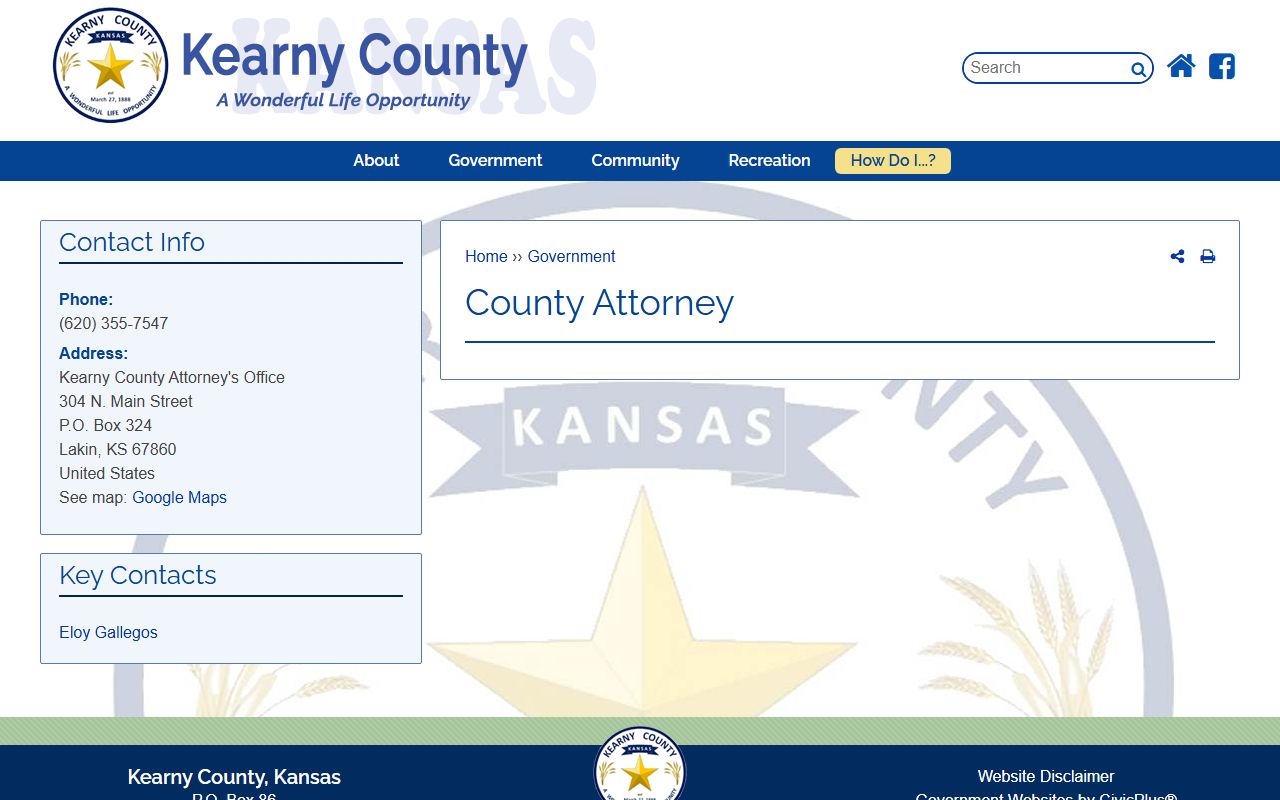
That office matters because the county attorney is the local charging authority for Kearny County criminal matters.
Kearny Charges After Arrest
Charges after arrest usually become a court record through a complaint or information filed by the prosecutor. A complaint can start the case and state the alleged offense. An information is a prosecutor's formal charging document. An indictment is tied to grand jury action and is less common in routine local charging practice, but it remains a recognized charging form. The field that matters most is not just the first charge. Later entries may show an amended count, reduced count, dismissal, or plea to a different offense.
| Document | Filed By | Common Use | Record Point |
|---|---|---|---|
| Complaint | Officer or prosecutor | Initial criminal filing | Starts the allegation and case events. |
| Information | Prosecutor | Many formal district court charges | States counts and statutes being prosecuted. |
| Indictment | Grand jury | Serious or special matters | Shows a grand jury accusation rather than a standard complaint path. |
Kearny County Charge Status
Charge status changes are common. One arrest can create several counts, and each count can end differently. A pending count has not reached final disposition. An amended or reduced count means the filed allegation changed. A dismissed count is not a conviction. A conviction requires a guilty plea, no contest plea accepted by the court, guilty verdict, or other qualifying judgment.
| Status | What It Means |
|---|---|
| Pending | The count is still active and no final outcome is entered. |
| Amended / reduced | The prosecutor or court record changed the charge, statute, class, or severity. |
| Dismissed | The count was ended without a conviction on that count. |
| Diversion | The case may be handled through an agreement rather than immediate conviction, depending on terms and completion. |
| Convicted | The record shows a plea, verdict, or judgment that supports a conviction. |
Kearny Charges vs Convictions
Being arrested or charged is not the same as being convicted. Kearny County arrest records can show that an arrest happened, and court charge records can show what the prosecutor filed. Neither fact alone proves final guilt. The disposition and sentence entries are the parts of the court file that show whether a count ended in conviction, dismissal, acquittal, diversion, or another outcome.
| Point | Charge | Conviction |
|---|---|---|
| Stage | Accusation after arrest or investigation. | Final or accepted court outcome. |
| Can change? | Yes, charges may be amended, reduced, or dismissed. | Later relief may occur through appeal, expungement, or other court order. |
| Where to verify | Charging document and docket. | Disposition, journal entry, and sentence. |
Kearny Sealed and Expunged Charges
Charge records may be limited by statute, court order, or case type. Juvenile offender records are not ordinary public portal records, and juvenile expungement is governed by K.S.A. 38-2312. Adult expungement is governed by K.S.A. 21-6614 and can cover eligible convictions, arrest records, and diversion agreements. The petition is filed in the convicting court, so a Kearny case is handled through Kearny County District Court.
The Kansas juvenile expungement statute is a key source for restricted juvenile charge records.
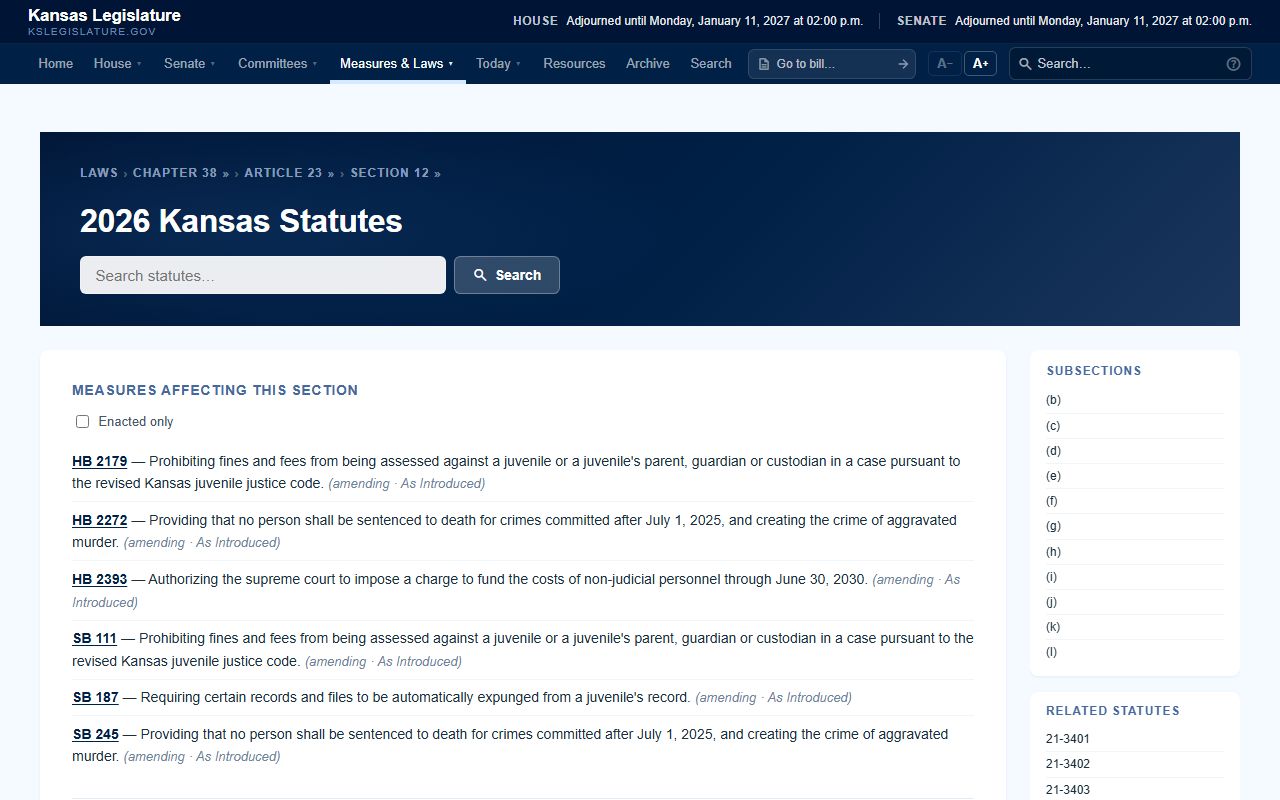
Juvenile limits are important because a public charge search should not promise access to restricted youth records.
| Point | Sealed | Expunged |
|---|---|---|
| Public visibility | Hidden from ordinary public access. | Treated as not public for most purposes. |
| Source | Statute, rule, or court order. | Kansas expungement petition and order. |
| Limit | Some users may still have access. | Specific agencies may still see records under Kansas law. |
Kearny Charge Codes and Severity
Kansas charge entries may cite a statute, count number, severity level or class, offense date, bond setting, prosecutor, plea, amended status, dismissal, and disposition. A felony and misdemeanor are different levels of criminal charge. Infractions and traffic matters may follow different paths. A Lakin city ordinance charge may be handled in municipal court, while a state-law felony is a district court matter.
When reading court charges after arrest, match the count number to the disposition. Count 1 can end one way while Count 2 is dismissed or amended. If the status is unclear online, request the charging document, journal entry, or sentencing order from the Clerk of the District Court.
Kansas Criminal History Lookups
KBI Criminal History Record Search is separate from Kearny County court records. It may report statewide criminal-history information, but it does not replace the district court docket or local charging document. A KBI report should not be used to infer every detail of a Kearny County case file, especially charge amendments, docket events, sentencing terms, or later expungement activity.
Federal records are also separate. The District of Kansas uses CM/ECF and PACER, not Kansas CaseSearch. The District of Kansas CM/ECF system applies to federal cases, not Kearny County District Court charges.
That federal system is useful only when the arrest or charge belongs to the U.S. District Court for the District of Kansas.
Kearny Arrest Records Background Use
A charge lookup is best used to understand the case status. It should not be treated as a regulated employment, tenant, credit, or insurance screening product. A charge may be pending, dismissed, expunged, sealed, or different from the offense of conviction. Certified copies for legal use should come from the court clerk, not a search-results page.
Important: Kearny County Court Records is not a consumer reporting agency and cannot be used for FCRA-regulated decisions.
Restricted Kearny Charge Records
Restricted charge records include juvenile records, sealed charges, expunged matters, protected-party information, personal identifiers, and records tied to ongoing investigations. Search warrants and active law-enforcement records may be withheld under Kansas access limits. K.S.A. 45-221 lists categories agencies are not required to disclose, and court rules also control access to judicial records.
Note: If a Kearny County arrest did not lead to a filed district case, Kansas CaseSearch may not show a court charge record.